HIU No Hot Water? The Smart Homeowner’s Guide to Fast Diagnosis and Reliable Fixes
Few things are more frustrating than turning on the tap and getting a cold shock instead of a comfortable stream of hot water. If your building is served by a communal or district heating network and your home has a Heat Interface Unit (HIU), the cause and cure for no hot water can be quite different from a traditional boiler. Understanding how an HIU works, why it can struggle to deliver hot water, and what to check before calling a professional can save time, money and hassle. This guide explains the most common reasons for HIU no hot water issues in London apartments, what you can safely try yourself, and how trained HIU engineers restore reliable performance—often in a single visit.
How HIUs Deliver Hot Water—and Why They Sometimes Don’t
An HIU (Heat Interface Unit) is the bridge between the building’s central energy plant (or wider heat network) and your home’s heating and domestic hot water. Instead of burning gas inside your property, your HIU uses primary hot water from the network to heat your taps and radiators via a plate heat exchanger. When a hot tap opens, sensors and valves inside the HIU react: a flow sensor detects demand, a control valve regulates how much primary heat enters the exchanger, and a thermostatic or electronic controller aims to deliver hot water at a stable temperature.
When there’s no hot water, the root cause typically sits in one of three areas:
1) Building supply issues. If the plant room is down, the primary temperature is too low, or differential pressure on the network is inadequate, your HIU can’t extract enough heat. This can happen during planned outages, faults in the communal system, or network balancing problems, and usually affects multiple flats at once.
2) Flow or control faults inside the HIU. Common culprits include a clogged strainer that starves the unit of primary flow, a faulty hot water flow sensor (the HIU doesn’t “see” that a tap is open), a failed actuator or control valve that can’t pass enough heat, or a defective temperature sensor misreading the conditions. Air in the primary circuit can also interfere with performance.
3) Domestic-side restrictions or temperature mixing problems. In London’s hard-water areas, limescale can quickly coat plate heat exchangers, reducing heat transfer so the water never gets properly hot. A sticking or failed thermostatic mixing valve (TMV) can also mix too much cold, delivering lukewarm or cold water even if the HIU is performing. Some properties also have tap or shower mixers that mimic HIU failure when they’re actually the issue.
Symptoms help narrow things down. If heating works but hot taps don’t, the issue often lies with the hot water side (flow sensor, DHW control valve, TMV, or scaled exchanger). If neither heating nor hot water works, look to building supply, isolation valves, power to the HIU, or severely blocked strainers. If water starts hot then fades, that suggests insufficient primary flow, temperature modulation trouble, or scaling that can’t sustain heat under higher demand.
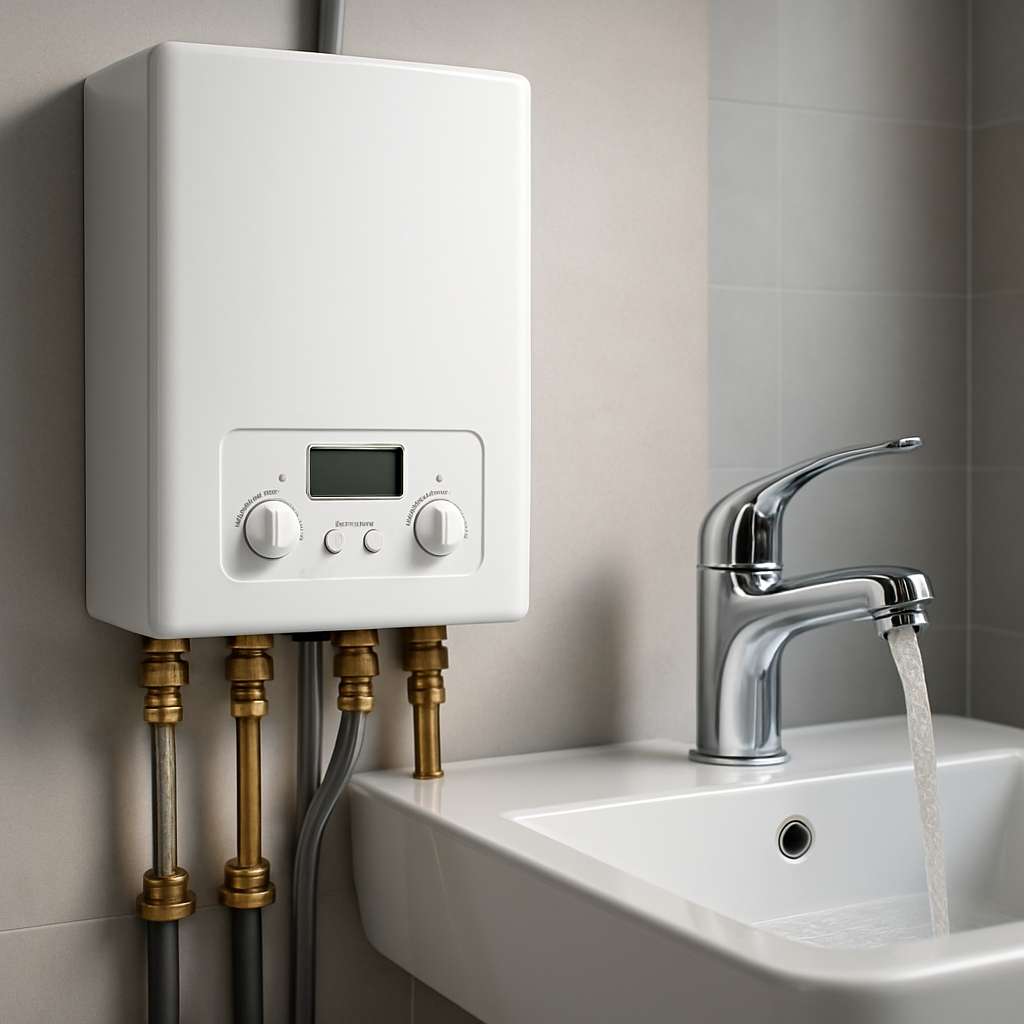
Quick Checks Before You Book an Engineer (Safe, Simple, and Often Overlooked)
A few practical checks can prevent unnecessary disruption. Stay safe: avoid removing HIU covers or disturbing sealed components—only qualified engineers should open units.
– Check more than one tap. Test both a basin tap and a shower. If one outlet is cold but another is hot, you may have a local mixer or tap cartridge issue rather than a central HIU fault. Try setting the shower to maximum hot to rule out an overzealous shower mixer blending too much cold.
– Compare hot water to heating. If radiators still warm up but taps run cold, your HIU’s domestic hot water control path (flow sensor, control valve, or DHW plate heat exchanger) is suspect. If radiators and taps are both cold, consider a building-side outage or a primary flow problem.
– Run the tap longer. Some HIUs have a short delay while the plate heat exchanger reaches setpoint. Run a hot tap for 60–90 seconds to see if temperature stabilises. If it briefly warms then cools, that points to insufficient primary flow or a failing control valve that can’t maintain demand.
– Confirm power and controls. Make sure the HIU has electrical power and that any user controls or thermostats (if applicable) are on. Some modern HIUs show fault codes; note them for the engineer.
– Look for building notices. Planned maintenance in the plant room or heat network can temporarily drop primary temperature or shut supply. Check with building management or neighbours to see if it’s a wider issue.
– Check metering and credit. Many London networks use prepayment or smart metering for heat. Ensure your account has credit and any heat meter valves are open. A closed valve at the meter can mimic HIU failure.
– Feel the pipes—carefully. Without removing covers, you can sometimes feel accessible primary pipework upstream of the HIU. If everything is stone cold while neighbours have heat, the problem may be supply-side. If pipes are hot but water is cold, the issue likely lies within the HIU or your domestic mixing components.
If these checks don’t restore service, it’s time for an HIU specialist. Skilled engineers can measure primary temperatures and pressures, test sensors and valves, and identify whether the fault sits in the building supply, your HIU controls, or the domestic side. If you’re stuck with HIU no hot water issues in a London flat, fast-response HIU engineers can often diagnose and resolve the fault in one visit, minimising downtime for residents and avoiding repeat callouts.
Professional HIU Diagnosis and Repairs: What to Expect in London Homes
When a trained engineer arrives, the first step is to establish whether the HIU is receiving adequate primary conditions. They’ll typically measure primary flow and return temperatures, check differential pressure, and confirm strainers aren’t throttling the system. If the building supply is healthy, diagnostics shift to the HIU’s hot water pathway. Engineers verify the hot water flow sensor, check the operation of the control valve/actuator, and compare actual outlet temperatures to the unit’s target. On the domestic side, they assess the thermostatic mixing valve and look for tell-tale signs of scale, such as rapid temperature drop under flow or poor heat transfer across the plate heat exchanger.
Common repairs include cleaning or replacing blocked strainers (restoring primary flow), replacing faulty DHW sensors or flow turbines, and servicing or swapping actuators and control valves that no longer modulate correctly. In hard-water areas, descaling the plate heat exchanger can be transformative: restoring proper heat transfer often fixes “lukewarm only” complaints. If a TMV is stuck or drifting, recalibration or replacement brings hot water back to a stable setpoint. Where water quality has been neglected, engineers may recommend a targeted chemical clean or powerflush of secondary circuits and the addition of inhibitors or scale control devices to protect against rapid reoccurrence.
Real-world examples highlight typical scenarios. In a riverside development in Greenwich, residents reported intermittent hot water that dropped off during peak hours. Primary conditions were marginal; once strainers were cleaned and the control valves recalibrated across several HIUs, stable flow and temperature returned for all flats. In a converted warehouse in Shoreditch, a single flat had reliable heating but no hot water. Testing showed a failed DHW flow sensor; swapping the sensor and servicing the mixing valve restored stable 50–55°C hot water at the taps within an hour.
Preventative maintenance makes a measurable difference. Annual HIU servicing that includes strainer cleaning, sensor checks, valve exercise, and temperature verification helps avoid emergency failures. In London’s limescale-prone postcodes, periodic plate heat exchanger inspections and scale control recommendations keep efficiency high. For landlords and property managers, documenting readings—primary temps, differential pressure, outlet setpoints—builds a performance baseline that speeds diagnosis if residents later report no hot water. Fast callouts, fixed pricing, and engineers experienced with all major HIU brands reduce disruption and costs across entire buildings, ensuring residents enjoy dependable hot water throughout the year.

Accra-born cultural anthropologist touring the African tech-startup scene. Kofi melds folklore, coding bootcamp reports, and premier-league match analysis into endlessly scrollable prose. Weekend pursuits: brewing Ghanaian cold brew and learning the kora.
About The Author

Kofi Mensah
Accra-born cultural anthropologist touring the African tech-startup scene. Kofi melds folklore, coding bootcamp reports, and premier-league match analysis into endlessly scrollable prose. Weekend pursuits: brewing Ghanaian cold brew and learning the kora.